
VoIP Phone System Benefits: Why Businesses Are Making the Switch
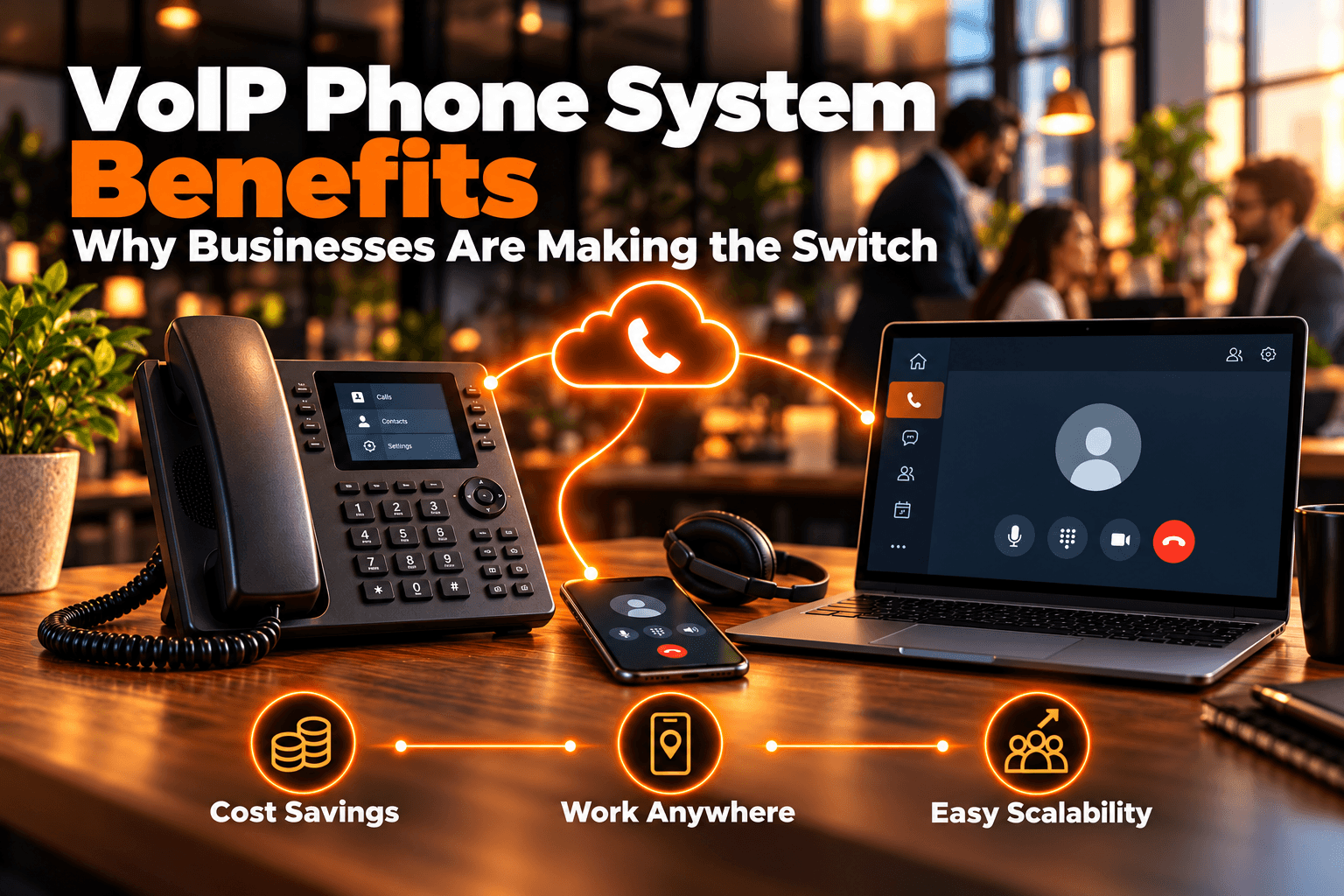
Somewhere between the third time you put a client on hold by accident and the moment you realized your office phone bill was more than your internet service, you probably started wondering if there was a better way. There is. And thousands of businesses are already using it.
A VoIP Phone System routes your calls over the internet instead of through traditional phone lines. It is faster, cheaper, and far more flexible than the systems most businesses have been using for years.
In this article, we break down exactly why businesses are making the switch and what you can realistically expect when you do.
What Is VoIP and How Does It Work?
VoIP stands for Voice over Internet Protocol. In simple terms, it converts your voice into digital data packets and sends them over the internet to the person you are calling. The result is a clear, reliable phone call, just delivered in a completely different way than a landline.
You can make VoIP calls from a desktop computer, a smartphone, a tablet, or a VoIP-enabled desk phone. There is no need to install new physical phone lines or keep bulky hardware in a server room. Everything is managed through software and your internet connection.
Top VoIP Phone System Benefits for Businesses
1. Significant Cost Savings
Traditional phone systems come with installation costs, monthly line rental, maintenance fees, and expensive long-distance charges. VoIP eliminates most of these. Because calls travel over the internet, domestic and international calls cost significantly less.
For small businesses especially, this is one of the most immediate and noticeable benefits. Monthly phone bills can drop by 40% to 60% after switching, depending on call volume and previous setup costs.
2. Flexibility to Work from Anywhere
One of the biggest advantages of a VoIP phone system for business is location independence. Your team can use the same business number from home, a coffee shop, or across the world. All they need is an internet connection and the VoIP app on their phone or computer.
This is particularly valuable for businesses with remote or hybrid teams. Calls do not need to be forwarded from a physical office number. The system follows the person, not the desk.
3. Easy Scalability
Adding a new team member to a traditional phone system often means waiting days for a technician to install a new line. With VoIP, you simply add a new user account from your admin dashboard. It takes minutes, not days.
This scalability makes VoIP ideal for growing businesses. You pay only for the users you have and add capacity as needed, without any infrastructure changes.
4. A Wide Range of Business Features
Modern VoIP systems come loaded with features that used to require expensive enterprise hardware. These include:
- Auto-attendant and IVR menus
- Call recording
- Voicemail-to-email transcription
- Call analytics and reporting
- Video conferencing
- CRM and helpdesk integrations
- SMS and team messaging
Many of these features are included in standard plans, not locked behind expensive tiers.
5. Improved Customer Experience
When customers call a VoIP-powered business, they are greeted by professional call menus, routed to the right person quickly, and can leave voicemails that get transcribed and delivered straight to an inbox. That kind of streamlined experience builds trust.
Call recording also lets you review conversations, spot opportunities for improvement, and train new team members using real examples.
6. Simple Integration with Business Tools
VoIP systems connect easily with tools your team already uses. CRM platforms like HubSpot or Salesforce can log calls automatically. Help desk tools like Zendesk can pull in call data. These integrations reduce manual data entry and give your team more complete customer records.
VoIP Solutions for Small Business: Is It Worth It?
Absolutely. Small businesses arguably benefit more from VoIP than large enterprises do. You get enterprise-level features at a fraction of the cost, and you do not need an IT department to manage it.
Here is what makes VoIP particularly practical for smaller teams:
- No upfront hardware investment: Use the devices you already have.
- Predictable monthly costs: Most plans are flat-rate per user.
- Professional image: Auto-attendants and call menus make even a two-person team sound like a larger operation.
- Quick setup: Most businesses are up and running within a day or two.
What Is the Best VoIP for Business?
The best VoIP for business depends on your team size, workflow, and budget. That said, there are some consistent markers of a quality provider: strong uptime guarantees, clear per-user pricing, a responsive mobile app, and integration options with the tools you already use. Voxsun is one option worth evaluating if you are looking for a reliable VoIP Phone System that works for businesses of different sizes without a steep learning curve.
Common Concerns About Switching to VoIP
What about call quality?
Call quality on modern VoIP systems is excellent, provided you have a stable broadband connection. Most providers also offer Quality of Service (QoS) settings to prioritize voice traffic on your network.
What if the internet goes down?
Most VoIP providers allow you to set up call forwarding to a mobile number automatically if your internet drops. This ensures you never miss an important call, even during an outage.
Can I keep my existing number?
Yes. Number porting is standard across most VoIP providers. You can transfer your existing business number with minimal disruption.
Frequently Asked Questions
What is a VoIP phone system?
VoIP (Voice over Internet Protocol) is a technology that lets you make and receive calls over the internet instead of traditional phone lines. It works on computers, smartphones, and VoIP-compatible desk phones.
How much can a business save by switching to VoIP?
Most businesses report savings of 40% to 60% on their monthly phone bills after switching to VoIP. Savings are higher for companies that make frequent long-distance or international calls.
Is VoIP secure?
Yes, reputable VoIP providers use encryption protocols to protect calls and data. Look for providers that support SRTP (Secure Real-time Transport Protocol) and TLS (Transport Layer Security).
What internet speed do I need for VoIP?
Each active VoIP call typically uses around 100 kbps of bandwidth. A standard business broadband connection handles multiple simultaneous calls without issue.
Can VoIP replace my entire phone system?
Yes. VoIP can fully replace a traditional PBX system, including all internal and external calling features. Most businesses find that VoIP covers everything their old system did, often with more features and lower costs.
Is VoIP suitable for international businesses?
VoIP is particularly strong for international use. Calls to other countries cost a fraction of what traditional international calling charges, and many providers let you get local numbers in multiple countries.